
Visibility Is the New Distribution: What the 2026 Hotel Distribution Chart Misses
Why distribution strategy needs more than presence across AI channels
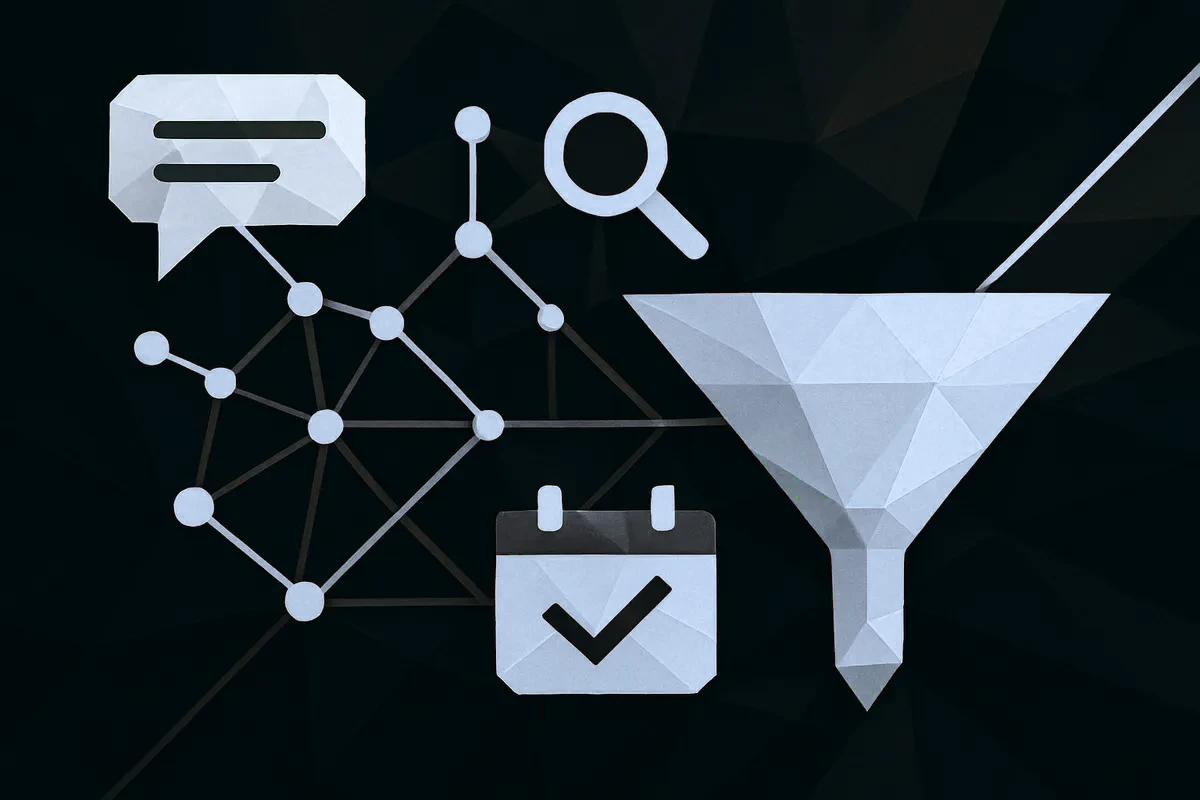
Visibility across AI assistants and booking platforms is essential, but independent hotels need engineered systems to convert visibility into direct demand. Learn what the 2026 hotel distribution landscape actually requires.
The 2026 Hotel Distribution Technology Chart from Hospitality Net lands on a phrase that's worth taking seriously: visibility is the new distribution strategy. The logic is sound. As travelers shift from typing queries into Google to asking AI assistants for recommendations, the surfaces where a hotel can be seen are multiplying — chat interfaces, AI overviews, agentic booking flows, metasearch, social discovery. Being visible across all of them is now a prerequisite, not a luxury.
But there's a gap in the framing that matters enormously if you actually operate a property rather than analyze the market. Visibility is an input, not an outcome. And for an independent hotel, visibility without an engineered system to capture and convert it doesn't create direct demand — it manufactures demand for the OTAs.
We've spent enough time inside hotel operations to know exactly where that demand leaks. So let's be precise about what the chart gets right, what it quietly assumes, and what independents actually need to build.
What "visibility is distribution" gets right
The structural shift is real. For two decades, hotel distribution was a question of channels: which OTAs to list on, how to manage rate parity, how much to spend on Google Hotel Ads, how to balance the channel mix against commission cost. Distribution meant placement on intermediaries.
That model assumed a relatively stable discovery layer. A traveler searched, compared a finite set of results, and booked. The hotel's job was to be present and price-competitive within that set.
AI-driven discovery breaks the stability of that layer. When someone asks an assistant "find me a quiet boutique hotel near the old town with a spa, under €250," the system isn't returning a ranked list of ten OTA links. It's synthesizing an answer from whatever structured and unstructured signals it can find — your website content, review sentiment, schema markup, third-party descriptions, availability feeds. The hotels that get named in that answer win the consideration set before a single comparison happens.
So yes: being legible to machines is the new shelf placement. If an AI can't understand what your property is, who it's for, and whether it's available, you don't exist at the moment of decision. The chart is correct to elevate this.
The assumption buried in the framing
Here's the problem. "Visibility is the new distribution" treats being surfaced and being booked as the same event. For a large chain with a strong brand and a mature direct-booking engine, that collapse is almost true — when a traveler sees Marriott in an AI answer, the path to Marriott.com is short and well-paved.
For an independent, the two events are not the same. There's a chasm between them, and the OTAs have spent twenty years engineering themselves to sit inside that chasm.
Consider what actually happens when an AI assistant surfaces an independent property today:
- The traveler hears the name, gets curious, and searches it directly.
- The top results are frequently OTA listings for that exact property, often outbidding the hotel on its own brand terms.
- The hotel's own site is slower, harder to book on, lacks real-time availability across room types, and offers no obvious reason to book direct.
- The traveler books on the OTA because it's frictionless and feels safe.
Visibility went up. Direct revenue did not. The hotel paid — in content effort, in SEO, in being interesting enough to get named — and the OTA collected the commission. You generated the demand and rented it back at 15–25%.
This is the failure mode the chart doesn't address: increasing visibility without owning the conversion layer is a transfer of value to intermediaries, dressed up as a strategy.
Visibility is a top-of-funnel input. It needs a system behind it.
The mistake is treating visibility as a destination. It's an input to a funnel that, for most independents, simply isn't built. Adding more channels to an unengineered funnel doesn't fix the funnel — it just pumps more volume into the leak.
What independents need is not more places to be seen. It's a system that converts surfaced attention into owned, direct bookings — and then converts those guests into a relationship the hotel controls. That system has four layers, and almost no independent has all four working together.
1. Machine-legibility: be understandable, not just present
The discovery layer is now partly read by machines, so the property has to be structured for machines.
- Structured data and clean schema — room types, amenities, location context, price ranges, availability — so an assistant can answer questions accurately instead of guessing or omitting you.
- Consistent, factual descriptions across every surface the AI might read, because contradictory third-party data makes you an unreliable answer the model will quietly avoid.
- Review and sentiment signal that actually reflects the property, since AI synthesis leans heavily on what others say.
This is the part the chart implicitly covers. But it's the cheapest part, and on its own it's the part that benefits OTAs as much as it benefits you — because OTAs are also feeding clean structured data about your property into the same machines.
2. Capture: own the moment after the surface
The moment a traveler is surfaced your name, the race is on. The entire game is getting them to your owned environment before the OTA intercepts them.
That means:
- Defending your own brand terms in paid and organic search so you're not paying to lose your own name.
- A direct site that loads fast and answers the same question the AI just answered — if the assistant said "quiet, spa, under €250," the landing experience has to confirm and extend that, not bury it.
- Real-time availability and pricing on the direct channel, every room type, every date — because the single fastest way to push a guest to an OTA is to make them doubt whether you actually have the room.
Capture is where independents lose most of the value. The visibility was free-ish; the capture infrastructure is what most never built.
3. Conversion: a direct booking flow that beats the OTA on experience
An OTA's booking flow is a conversion machine refined over years. An independent's flow is often a third-party widget bolted onto a brochure site. You will not win by matching the OTA — you win by being better in the dimensions the OTA can't touch:
- A reason to book direct that's real, not a vague "best rate guarantee" — a tangible benefit, a better room, a flexible policy, a personal touch the OTA structurally can't offer.
- Fewer steps, mobile-first, no surprise friction. Every form field is a chance to lose the guest back to the channel they trust.
- Trust signals that match the OTA's — clear cancellation terms, secure payment, confirmation that feels solid.
The defensible advantage of an independent isn't price. It's that you own the entire relationship and the OTA owns a transaction. But that advantage only exists if your conversion flow makes booking direct feel safer and better, not riskier and clumsier.
4. Retention: turn the booking into an owned relationship
This is the layer that makes the whole system compound, and it's the one the distribution-chart worldview ignores entirely because it stops at the booking.
Every direct booking is an opportunity to acquire a guest you own — their contact, their preferences, their stay history — rather than a guest the OTA owns and rents to you once. The economics flip completely on the second stay:
- A guest acquired via OTA, then re-acquired via OTA, costs commission every time.
- A guest captured direct, with a clean profile and a reason to return, costs almost nothing to bring back — and is reachable on channels you control.
Visibility's job is to acquire the first stay. The system's job is to make sure you never pay an intermediary for that guest again. A property that nails retention can tolerate expensive top-of-funnel visibility because the lifetime value is owned. A property that doesn't is forced to keep renting the same guests.
Why this is a systems problem, not a tooling problem
Here's what we keep observing across hospitality technology — and it's the same pattern we wrote about after HITEC 2026: the industry sells these four layers as separate products. A schema/SEO vendor. A metasearch manager. A booking engine. A CRM. A reputation tool. Each is individually fine. Stitched together by an independent operator with no integration budget, they don't form a funnel — they form four disconnected silos that leak between every handoff.
The OTA's structural advantage is precisely that it is one integrated system: discovery, capture, conversion, and the guest relationship all under one roof, optimized end-to-end. An independent competing with four bolted-on tools is bringing components to a systems fight.
This is the entire thesis behind how we approach the hotel vertical: independents don't need another channel or another tool. They need an engineered layer that connects visibility to direct revenue as a single system — machine-legibility feeding capture, capture feeding a conversion flow, conversion feeding an owned guest relationship, and the guest relationship lowering the cost of all future visibility. When those four operate as one system, increased visibility actually accrues to the hotel. When they don't, it accrues to whoever owns the conversion layer — which, today, is the OTA.
The reframe independents actually need
So we'd amend the chart's headline. Visibility isn't the new distribution strategy. Visibility is the new top of the funnel — and the strategy is owning everything below it.
For an operator deciding where to spend in 2026, the practical takeaway is uncomfortable but clarifying:
- Don't chase visibility you can't convert. Being named by an AI assistant is worthless — or worse than worthless — if the path from that mention leads to an OTA. Fix the capture and conversion layer before you scale the visibility layer.
- Measure direct-booking conversion, not impressions. Visibility metrics flatter everyone. The only number that matters is the share of surfaced demand that turns into a booking you own.
- Treat the four layers as one system. If you can't trace a guest from "surfaced by an AI" to "captured direct" to "booked direct" to "owned and reachable," you have channels, not a system.
The hotels that win the AI-discovery era won't be the ones most visible. They'll be the ones that built the machine to turn visibility into owned demand — and stopped subsidizing the intermediaries who were quietly counting on them not to.